





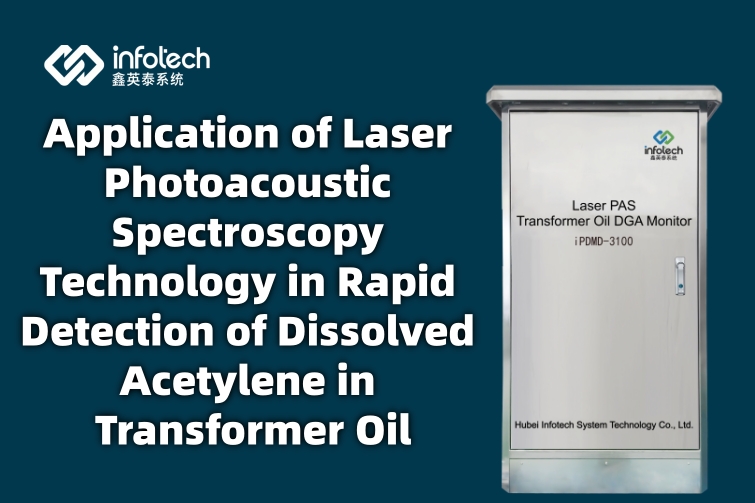
Application of Laser Photoacoustic Spectroscopy Technology in Rapid Detection of Dissolved Acetylene in Transformer Oil
Power transformers are critical, high-value equipment in power systems, yet they are relatively prone to faults, making it essential to deploy appropriate on-line monitoring solutions for fault prevention.
The operational status of power transformers is directly linked to the safe and stable operation of power grids. Dissolved Gas Analysis (DGA) of transformer oil is a pivotal method for assessing the insulation condition of transformers. Among the fault characteristic gases, acetylene (C₂H₂) is a typical and representative indicator, and its concentration variation is often the key criterion for diagnosing internal discharge faults in transformers.
In the construction of China's UHV backbone transmission grid, there is a clear mandatory requirement that oil-immersed transformers must be equipped with devices capable of rapid on-line detection of dissolved acetylene in oil, with a detection cycle of no more than 30 minutes. While the traditional gas chromatography method delivers high accuracy, it is constrained by long detection cycles and complex operation, which increasingly fail to meet the stringent requirements of modern grid operation.
Leveraging more than 20 years of technical accumulation in the field of power grid safety monitoring, Hubei Infotech System Technology Co., Ltd. has innovatively developed a rapid detection device for acetylene in transformer oil based on laser photoacoustic spectroscopy technology. With breakthrough performance including ultra-fast detection within 25 minutes and ultra-high sensitivity down to 0.1μL/L, the device has redefined the industry standard for on-line DGA monitoring of transformers. In 2024, the company captured over 50% market share in State Grid Corporation of China (SGCC)’s bidding for UHV single-acetylene detection devices.
Laser Photoacoustic Spectroscopy Detection Technology
Laser photoacoustic spectroscopy is an advanced detection method based on the photoacoustic effect.
When a modulated laser of a specific wavelength passes through the gas to be measured, target acetylene molecules selectively absorb photon energy matching their absorption spectral lines, transitioning from the ground state to the excited state. Through collisions with surrounding molecules, the excited molecules convert the absorbed light energy into thermal energy, resulting in periodic changes in the local gas temperature. Such temperature fluctuations induce pressure variations in the gas, generating acoustic signals. These signals are amplified via a photoacoustic cell, detected by high-sensitivity microphones and other equipment, and then output. The intensity of the acoustic signal is directly proportional to the concentration of the target gas.
Infotech's technical team has significantly improved the detection sensitivity and selectivity of the system through technical optimizations including laser source selection, modulation frequency adjustment to enhance the signal-to-noise ratio (SNR), and resonant cavity design to amplify acoustic signals.
Core Technical Features of the Device
- Miniaturized Laser Modulation System.The Infotech device adopts a near-infrared laser light source, which offers the advantages of smaller size, lower power consumption and precise tuning range compared with traditional lasers. The proprietary core technology realizes precise matching between the laser wavelength and the acetylene absorption peak, and the independently developed laser light source module supports a light intensity modulation frequency of 10kHz.
- Multi-stage Gas Pretreatment System.To address the challenge of gas extraction from transformer oil, the company has developed and applied static sealed vacuum bubbling oil-gas separation technology, with the vacuum degassing unit achieving a degassing efficiency of over 95%.
- High-sensitivity Acoustic Detection Cavity.An innovative new photoacoustic cell with small gas volume and high resonant frequency has been designed. Photoacoustic signals are weak signals that require technical amplification. The photoacoustic cell functions to amplify photoacoustic signals and filter ambient noise. This new photoacoustic cell integrates a gas buffer cavity, resonant cavity, as well as microphones and temperature-sensitive sensors internally. With a resonant frequency of around 9000Hz, it amplifies acoustic signals near this frequency while filtering out signals away from the frequency, delivering excellent ambient noise isolation capability. It is currently the only mass-produced high resonant frequency photoacoustic cell in domestic and international markets.
- Intelligent Analysis System.The system is integrated with machine learning algorithms, enabling automatic baseline correction, temperature and humidity compensation, multi-gas interference elimination, and intelligent diagnosis of fault types (including partial discharge, arc discharge, etc.).
- Breakthrough Technical Performance.This rapid detection device for dissolved acetylene in transformer oil based on laser photoacoustic spectroscopy delivers a detection time far shorter than 30 minutes, achieving an acetylene detection limit of 0.1μL/L with a measurement error within ±0.1μL/L or 10%.
Engineering Application and Industry Prospects
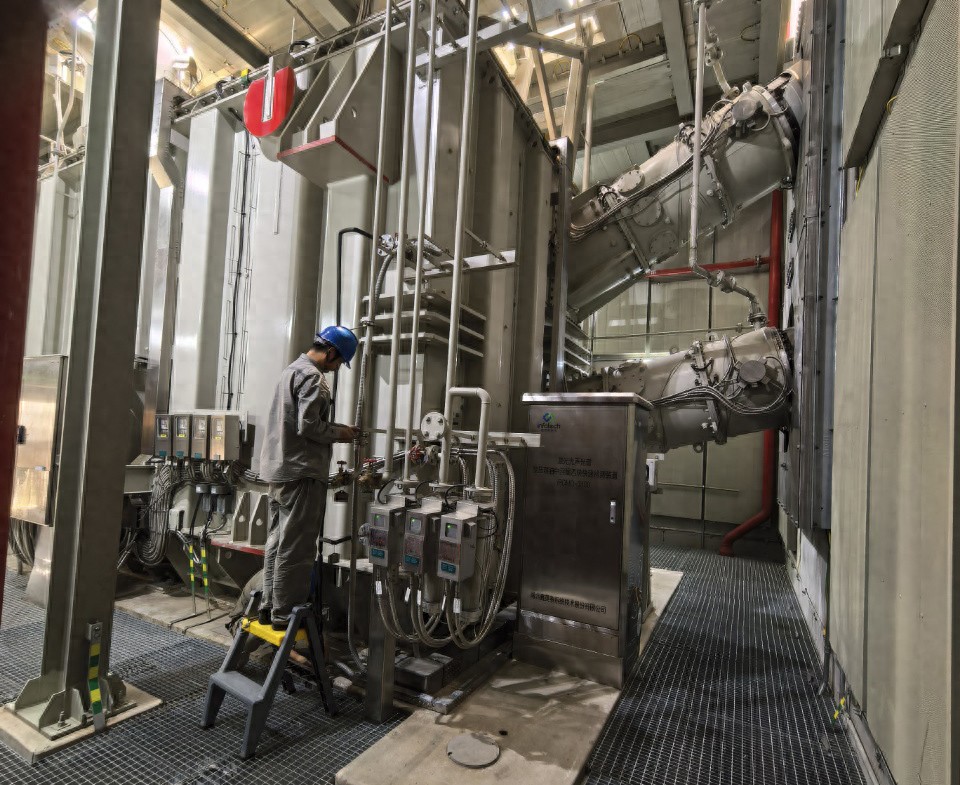
The laser photoacoustic spectroscopy rapid detection device for dissolved acetylene in transformer oil is the core equipment for online monitoring of the safe operation of key equipment in the ultra-high voltage converter transformer, reactor and other power grid components. As a key component equipment of the ultra-high voltage power grid, the device is the first in the industry to apply laser photoacoustic spectroscopy technology to improve the detection of dissolved acetylene gas in transformer oil to the ppm ultra-high precision level. It has entered the performance testing product list of the State Grid 2023 converter single acetylene rapid detection device and ranks among the top. It is one of the first acetylene rapid detection products based on laser photoacoustic spectroscopy technology launched to the power market. The device has been installed in the first 10 million kilowatt tiered AC/DC joint construction station connected to the 1000kV and 500kV AC power grids in China, as well as in a demonstration of a ± 800kV ultra-high voltage converter station that is one of the first four digital converter stations to be built by State Grid. It has achieved early warning of potential equipment failures and greatly improved the ability to ensure power operation safety.
Optical sensing is a key direction for China's national energy technology revolution and the development of intelligent operation and maintenance for SGCC, supporting the implementation of digital and intelligent operation and maintenance of power grids in the new era. With the continuous advancement of technology, it is expected that China's power equipment condition detection technology will enter a new era of minute-level response.
Related Posts